What is eczema?
Eczema is an inflammation of the skin. It often begins with redness and itching, but can also develop into small bumps, blisters, dryness, flaking, and cracks. With prolonged issues, the skin can become thickened, rough, and more sensitive.
Eczema can manifest differently depending on its cause, skin type, and location on the body. Two common forms are contact eczema and atopic eczema.
Contact Eczema – common on the hands
Contact eczema occurs when the skin reacts to something it comes into contact with. It is often divided into two types: irritant contact eczema and allergic contact eczema.
Irritant Contact Eczema is the most common form and is caused by external factors. The skin can become irritated when frequently exposed to water, detergents, solvents, oils, dirt, or other substances that dry out or damage the skin barrier.
This type of eczema is often linked to work environments where hands are used extensively and subjected to repeated stress. This can include professions in healthcare, food service, industry, workshops, cleaning, restaurants, and hairdressing.
Allergic Contact Eczema
Allergic contact eczema occurs when the skin develops a hypersensitivity to a specific substance. This can include metals like nickel and chromium, rubber, perfume, preservatives, or certain substances in the work environment.
Once an allergy has developed, very small amounts of the substance can be enough to trigger a reaction. The eczema usually appears where the skin has been in contact with the substance, which is a common reason why the hands are affected.
The symptoms can often be alleviated if the skin is cared for properly and if the substance causing the reaction is avoided. However, the hypersensitivity itself can persist for a long time.
Atopic Eczema and Sensitive Skin
Atopic eczema is often associated with a genetically sensitive skin barrier. It is common in children but can also affect the skin later in life. Individuals who had flexural eczema as children may have a higher risk of developing hand eczema as adults.
A sensitive or dry skin barrier makes the skin more susceptible to water, cold, soap, detergents, and other stressors. Therefore, it is especially important to prevent dehydration and choose gentle products.
Why are hands particularly vulnerable?
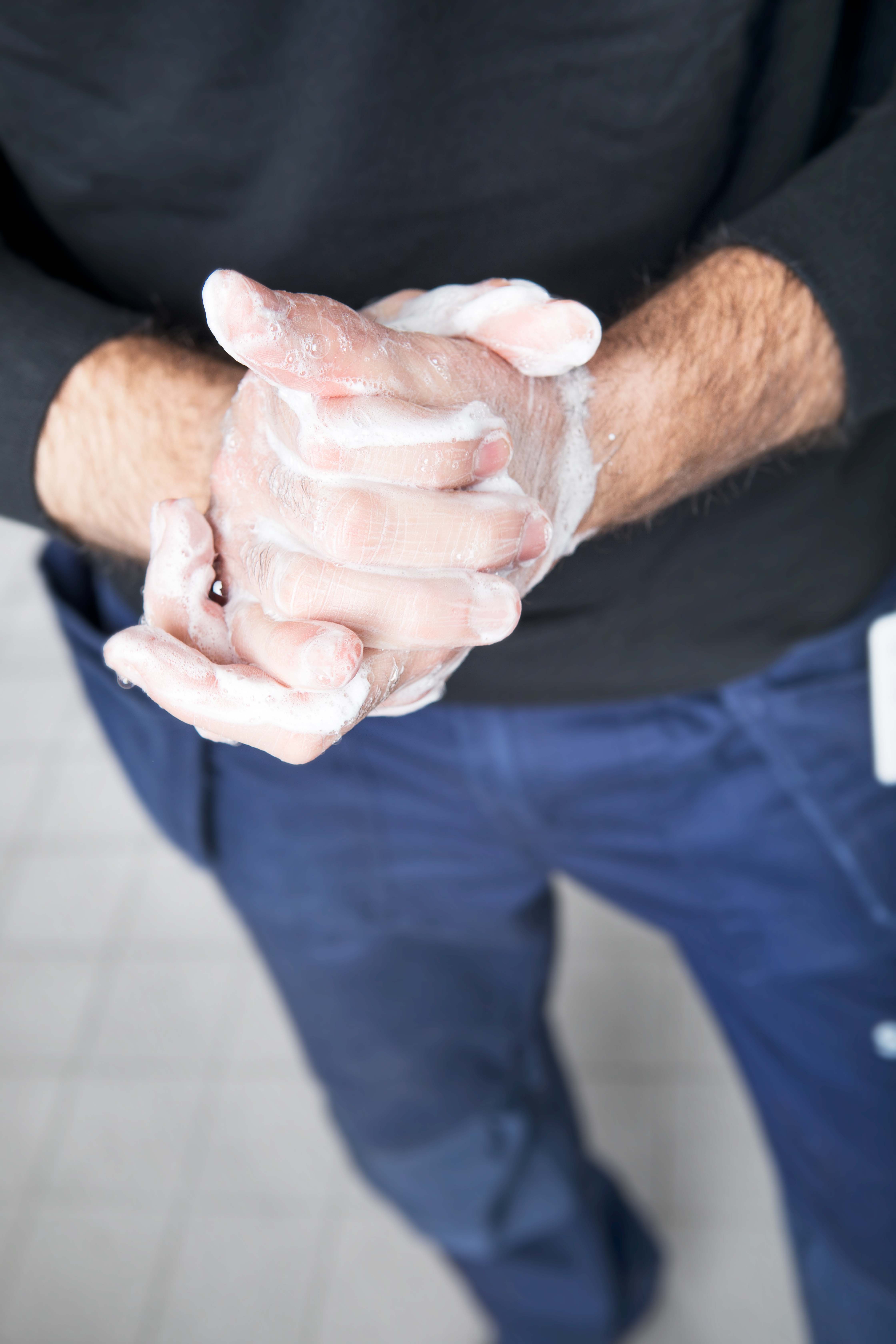
Hands come into daily contact with water, soap, disinfectants, dirt, chemicals, and various materials. At work, the strain can be even greater, especially in professions where hands are washed frequently or exposed to wet work.
When the skin's natural lipid barrier breaks down, the skin has a harder time retaining moisture and protecting itself from external substances. This can lead to dry, red, itchy, and irritated skin — increasing the risk of hand eczema.
How to prevent eczema
The most important advice for reducing the risk of eczema is to help the skin maintain its natural protective barrier. You do this by avoiding unnecessary dehydration and providing the skin with regular hydration and moisturization.
Some simple tips:
- Use mild and preferably unscented cleansing products.
- Don't wash your hands more often than necessary.
- Dry your hands thoroughly after washing.
- Moisturize your hands regularly with hand cream.
- Wear protective gloves when work requires it.
- Avoid substances you know your skin reacts to.
- Continue to moisturize even when your skin feels better.
Choose gentle cleansing and moisturizing skincare
For people with sensitive skin or recurring skin problems, the choice of products is especially important. A mild soap or cleansing cream can reduce the strain on the skin, particularly with frequent hand washing.
After cleansing, the skin often needs help to restore its balance. A rich cream or moisturizing lotion can help strengthen the skin barrier and reduce the risk of dryness, irritation, and cracks.
When your skin needs extra support
If your skin is already irritated, dry, or cracked, it's important to act early. Continue to moisturize regularly even when your skin starts to feel better. The skin may need more time to fully recover than you initially think.
For prolonged or recurring issues, you should seek help from healthcare, occupational health services, or other medical expertise to investigate the cause and receive appropriate treatment.
Summary
Eczema is common and can affect daily life, work, and well-being. Hands are particularly vulnerable as they often come into contact with water, detergents, dirt, and other irritants.
By choosing gentle products, avoiding unnecessary dryness, and moisturizing the skin regularly, you can reduce the risk of eczema and help the skin maintain its natural protection.